Noel Lavery, Permanent Secretary of the newly-formed Department of Agriculture, Environment and Rural Affairs (DAERA), briefed guests at the NIGTA lunch on the structures, synergies and challenges of his new department.

Led by Minister Michelle McIlveen, DAERA brings together functions from the former DOE, DARD and DCAL. It has a budget of £265m, employs nearly 3,000 staff based in over 70 locations and covers a broad spectrum of areas from air quality to zoo licensing.
Guests were told that by moving these functions under one single policy leadership, the new Minister and her department has an opportunity to drive an integrated policy agenda for growing the agri-food sector and protecting and improving the environment.
“It is an honour to represent the NI Grain Trade Association as its President for the next year but I realise it will also be a challenging time” David O'Connor told the Association's annual general meeting after his election.

David said “The continuing difficulties faced by all of the farming sectors along with the upcoming referendum on UK membership of the EU are just two of the issues which are going to present NIGTA members with some very serious challenges. In an effort to support our farming customers our businesses have also come under pressure and we are ensuring that we are represented at all of the negotiating tables to try and find solutions for our major industry.”
Referring to developments within NIGTA David stated that Food Fortress, the quality assurance scheme for feed compounders and importers had expanded and the feed compounder sector now had 72 members with 13 of these in the South. The scheme now covers 4 million tonnes of feed.
Trade Awareness courses had been introduced which benefited new entrants to the industry and the Feed Advisers Register (FAR) is ensuring that all representatives of NIGTA members are fully up to date with research and developments in the industry in order to provide a comprehensive service to the farming sector.
David concluded by noting the increase in NIGTA membership and gave a special welcome to the smaller compounders who provide a valuable service to agriculture and are developing their businesses through Food Fortress and FAR.
David O'Connor has been working in the feed trade for 29 years. For the past 25 years he has worked with Cefetra, formerly McCorkell, Belfast. Cefetra operates in the UK and Ireland as part of the Baywa Group, the largest agricultural co-op in Europe, which supplies 34 million tonnes of raw material per year to the European feed market.
As Manager of Cefetra and President of NIGTA, David will have little time to pursue his golfing hobby or to support his three children as they attend various venues playing underage football.
The other appointments made at the AGM include Keith Agnew, United Feeds as Vice President; Patrick McLaughlin, Devenish Nutrition as Honorary Secretary; and Stephen Burrell, United Feeds as Honorary Treasurer. Paul Sloan, Tullyherron Farm Feeds and Niall O'Donnell, United Molasses were elected to serve on the Executive Committee.
Robin Irvine and Doris Leeman will continue to be employed as Chief Executive Officer and Secretary respectively.
NIGTA AGM 2016


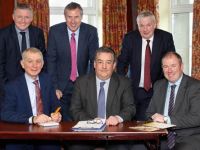
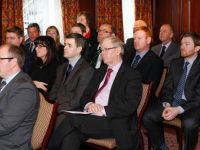
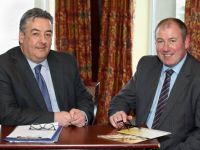
Food production in Northern Ireland has enjoyed 12 years of continued growth but to succeed against the current very challenging market place the Northern Ireland Food Industry especially the dairy sector needs to be more market lead according to Dr. David Dobbin, Group Chief Executive of Dale Farm Ltd and Chairman of the NI food and Drink Association.
Speaking at a meeting of the Northern Ireland Grain Trade Association, Dr. Dobbin stressed that food industry faced a number of challenges that are disrupting the market and causing the current deflation, volatility and turmoil.

“Oversupply and weakening global demand had led to a general fall in commodity prices. Favourable global weather had resulted in two successive bumper harvests & ideal grazing conditions. The ending of quotas is leading to surge in EU milk output and the development of fracking and green energy had resulted in energy price war with Opec, with this war fast becoming a last man standing battle.”
“Food demand had been weakened by a Russian ban on EU food produce and a slow down in Chinese demand. In retailing a move towards home shopping and the rise of discounters had led to intense price competition. Add to this the significant volatility in currency and adverse exchange rate movements especially against the Euro. If this wasn’t enough the uncertainty coming from the Brexit debate and the real threat that the UK could leave the EU had further added to market uncertainty.”
Dr Dobbin claimed that the cumulative impact of all of these market disrupters was being felt right along the supply chain from the feed industry to farmers, through to food processors and retailers.
“The reality is that no-one was making money in the current market and that the root cause of our problems is oversupply against current demand. If there is a lesson from the current market turmoil it is that we must be more market led and ensure when we produce on farm or in a processing plant that we have end customer/consumer, not just in mind, but as far as possible locked into a long term supply partnership. Market led growth will be profitable whereas mindless production was simply not sustainable.”
He went on to say that rather than sit out the current market turmoil the Northern Ireland food industry must step up its game and become more competitive, become better at marketing and more innovative. Most of all he said that we had to build on our strengths not just our ideal climate for grassland but on the strength of our people in farming, processing and the wider supply chain.
“Instead of regarding our island status as adding to our cost to market, we should focus on the natural barrier that makes it much easier for us to control our agri inputs and prevent the spread of disease. This has allowed us to create a food fortress with one of the highest integrity food supply chains in the world. We have significant world class expertise in our local Universities and Research institutes including the internationally recognised work on food safety and horse gate by Professor Chris Elliot who leads the locally based Institute for Global Food Security.”
“If we are to win through in the current environment of intense price competition and falling returns then we must up our game and proactively pursue opportunities to improve our competitiveness, opportunities to improve our product and service offering and opportunities to win new business.”
NIGTA December Meeting 2015




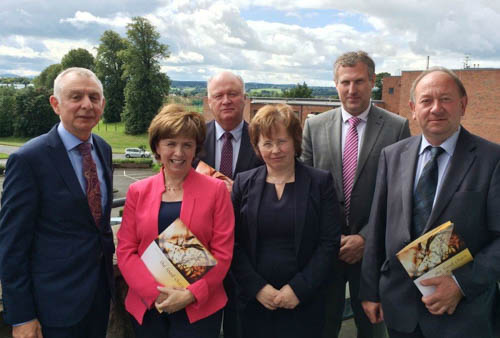
Diane Dodds MEP recently invited the N Ireland Grain Trade Association for an update on current issues in the food and feed chain. She was accompanied by DUP colleagues, David Simpson, MP and member of the DEFRA committee in Westminster and William Irwin MLA and Chairman of the Assembly Agriculture Committee in Stormont.
The NIGTA delegation comprised Fiona Mc Cord, convenor of the scientific committee, Keith Agnew from United Feeds and Robin Irvine, CEO.
The meeting covered a range of issues including the trades concerns on proposed EU legislation relating to the use of feed materials derived from Genetically Modified crops and to the incorporation of medicines in feedstuff.
The current cash crisis facing dairy farmers was discussed in detail and NIGTA delegates outlined how the current weakness in the feed materials market was reflected in feed prices - now at a 5 year low. The role of the trade in funding farmers through merchant credit and the current level of debt was a significant concern. With N Irelands dependence on exporting dairy products the sector was exposed to the effects of global volatility. Management of this volatility was going to be a particular challenge in the future.
Mrs Dodds was particularly pleased to hear that all the compound feed used in Northern Ireland was now covered by the Food Fortress program. She congratulated NIGTA for creating a unique selling point for food produced in the province.
The political representatives were very appreciative of the discussion and undertook to support the NIGTA concerns in Brussels, Westminster and Stormont. The meeting concluded with an invitation from Mr Irwin for NIGTA to present to the Assembly Agriculture Committee.
As an industry we are in the midst of some very challenging times, milk prices are near all-time lows and currently standing at levels that are unsustainable for Northern Ireland farming. Our pig industry continues to struggle and we still have no idea when and if we will get access to the Chinese markets. Our Beef farmers are now losing in access of over Stg 1 million per week.
What has caused these price reductions? , World Milk production increased by 1.8% last year. Cheaper commodity prices following years of good crops, reduced demand caused by poorer economic conditions in China and Africa and Trade restrictions especially in Russia have all led to the current situation.
Our industry faces challenges, lack of profitability in certain sectors and economic uncertainty around the outcome of the Brexit poll. We also have significant strengths – not least the family farm structure – the husbandry skills – the stockmanship - the dedication and our work ethic.
We have a well educated workforce at farm level which should be the foundation of a highly successful food industry. We as an industry need to build on this foundation, we need communication, integration, a market focus and a common purpose throughout the food chain.
The Northern Ireland food industry has to step up its game and become more competitive, better at marketing and more innovative. Most importantly we have to build on our strengths, our climate, our green pastures, the strength of our people in farming, processing and the wider supply chain.

Our island status gives us a natural barrier that makes it much easier for us to control our agri inputs and also to prevent the spread of disease. This has allowed us to create a food fortress with one of the highest integrity food supply chains in the world. We have world class expertise in our local Universities, including the internationally recognised work on food safety at the Institute for Global Food Security at Queens, in AFBI and in CAFRE.
An even greater challenge facing our industry is the upcoming referendum on UK membership of the EU. The UK is a net contributor to the EU budget. This means it pays in more money than it directly receives from the EU. Northern Ireland however is a net beneficiary -receiving more in the form of CAP support payments, research and development (R&D) funding and regional development (structural) funds than it pays in.
We as NIGTA do not believe that a UK exit from Europe will benefit Northern Ireland Agriculture, as recently stated by some industry leaders within Europe. UK companies have open access to 500 million consumers and in the event of an exit no one has been able to guarantee our continued access to those consumers or markets.
The Northern Ireland feed industry imported almost 3million tonnes of raw materials through our ports last year. Of this over 1.5 million came from Mainland Europe. We in Northern Ireland are the only part of the UK with a land border with Europe and every day substantial volumes of animal feed move across this border, raw materials and finished feed.
NI Agriculture relies on the free flow of labour from inside and outside Europe to help keep our costs competitive whilst we trade in a global market. Will we keep this free flow of labour if we are outside the EU?
Over the past twelve months NIGTA has seen its membership increase so that we now represent over 95% of all Feed manufactured in Northern Ireland, we have continued to tirelessly lobby for our members in all areas of our industry. Our executive members hold seats on every major industry body including the GAFTA raw material committee , AIC Sustainability and Feed committee , Food Fortress, NIFDA ,the Agri Food Strategy Board. Our Chief executive Robin Irvine attended well over 150 meetings in the calendar year 2015 lobbying in Brussels , London , Stormont and Dublin bringing NIGTA and its members influence to all of the relevant forums.
FOOD FORTRESS has, under the watchful eye of Queens Institute of Global Food Security, continued to see its membership grow to cover the Island of Ireland. FOOD FORTRESS now boasts 78 feed manufacturers and all the major importers as members bringing an unparalleled level of assurance to our food industry. This remains a unique selling point for producers of goods in Northern Ireland and gives an advantage in a highly competitive Global Market Place.
In conclusion yes we are in difficult times, but I am convinced that through the entrepreneurship, dedication and tenacity of our members we will be capable of facing and overcoming these challenges. 2016 is the year of food and drink in Northern Ireland and will showcase the results of the fine business we are all involved in.
NIGTA Annual Dinner 2016


Dairy Crisis Meeting - Minister O Neill
Present – Banks, UFU, Dairy Processors, DARD, and NIGTA. Present for the first time - Finance Companies, Rural Support, Farmers for Action, Fair Price Farmers.
Minister O Neill welcomed everyone and spoke of the immediate issues of cash flow on dairy farms and the need for strategies to manage volatility in the longer term.
Dairy processors (David Dobbin and Paul Vernon) reported that milk production was still increasing and there were concerns about sufficient processing capacity to cope with all the milk which will be produced in Ireland & UK this spring. GB production is up 5% and Ireland up 10% year on year. The oversupply of product is pulling prices down and we will reach 15p/litre in the next few months with no prospect of recovery in 2016. An effective Intervention for dairy product is still the best option and the weakening value of sterling will help the price but intervention is filling up fast and the current allocation will be filled by mid April.
UFU (Ian Marshall) said that the situation had deteriorated significantly since the last meeting in October.
Danske Bank (Robert McCullough) reported that overdrafts had been increased, capital moratoriums’ introduced and additional loans arranged. There were big variations in individual farm situations but debt was climbing and many farmers were facing harsh decisions. Minister stressed that the industry needed support from the banks at this difficult time! (Is this helpful? – could be building up debt burdens for the next generation of farmers).
NIGTA (RI) reported that the farm payments received in December had provided some respite but since then cash was drying up on farm and debtor days were increasing. Fertiliser purchases were not happening and there was concern about how they would be funded. Majority of fertiliser is supplied through the family merchant businesses. RI stressed the importance of communication with farmers – they need to understand the outlook for milk price and be realistic about their own cost of production to budget for the future.
DairyUK are convening a supply chain group (NIGTA have been invited to participate) which will look at managing margin and will report in October. An international dairy conference on 11th March will look at issues of profitability/volatility on dairy farms.
DAERA Stakeholder Event.
As part of the restructuring on the NI Civil Service the Stormont Executive have decided to reduce the number of departments from 12 to 9. Agriculture and environment come together to form -
Department of Agriculture, Environment and Rural Affairs. (DAERA)
Noel Lavery, DAERA Permanent Secretary (designate) introduced his deputies – David Small, Environment and Marine Group, Louise Warde Hunter, Central Services and Rural Affairs Group, Robert Huey, Veterinary Service and Animal Health Group (including FBI). 1 more deputy is still to be appointed to head the Food and Farming Group. Budget for 2016/17 - Resource £197.9m - Capital £48.8m.
This incorporates a 5.7% discount and ongoing reductions of 5% per annum are anticipated.
Strategic goals for the new department include - a more competitive, high performance, knowledge based agri-food sector with higher levels of regulatory compliance. Environmental goals include – more water at “good” status, high quality habitats and landscape, jobs created in rural areas and improved rural services. It is hoped to streamline regulation and maximise use of assets. An ongoing review of official controls, inspections and advisory services will conclude this year.
February 2016
Meeting with Environment Minister.
The meeting with Minister Durkan had been requested following his announcement that he intended to introduce a climate change bill. NIGTA outlined the work which had been done to reduce the phosphate content of both feeds and fertiliser and this had delivered benefits in terms of water quality. Farmers were being encouraged to analyse soil and make maximum use of farm manures to further reduce farm phosphate balances. The trade had also played its part in the Greenhouse Gas Partnership initiatives and through the Feed Advisors Register (FAR) network was playing a major part in educating farmers under the theme –“efficient farming cuts Greenhouse Gasses”. The effect of well managed pasture in sequestering carbon was highlighted as was the considerable reduction which has been achieved in the intensity of emissions in recent years. The point was stressed that Northern Ireland exports over 70% of its food production – largely to mainland UK, and any restrictions which damaged the competitiveness of our product would simply draw in imports from regions with a poorer environmental record.
NIGTA meets IGFA.
A very constructive meeting with the Irish Grain and Feed Trade Association was held in Dublin recently. Issues around some of the EU regulation on medications in feed and the approvals of new GM varieties were discussed and were of concern on both sides of the border. Our hosts were keen to hear about the NIGTA work on environmental issues eg phosphates, Greenhouse Gas Initiatives and the Feed Advisors Register. This was not yet a major a concern to southern businesses. Feed Assurance was discussed – in particular UFAS, Bord Bia and the Food Fortress program which now has 13 members in the south.
The management of major disease outbreaks on farm were discussed - feed deliveries to livestock units are essential but can risk the transmission of disease to other units. Transport protocols to avoid the risk of disease transmission were discussed and it was agreed that there should be a cross border element to any contingency plan developed. Farm debt, as always, was a major concern with milk producers in the North losing money and the southern mills concerned about pig producers. It was agreed that the meetings should be continued on a regular basis and that our associations should work more closely.
Consultations.
NIGTA’s response to the proposal for a Climate Change Bill and to the Consultation on the Review of Northern Ireland’s non domestic rating system, which threatens to increase the cost of goods passing through our ports, can be viewed under Consultations on the NIGTA website. www.nigta.co.uk
Diary Date – Our next quarterly lunch is on Thursday 3rd of March with guest speaker Janet Mc Collum, Chief Executive of Moy Park.
Trade Awareness Course – A trade awareness course is being scheduled for late March - please contact Doris if you wish to register delegates - This email address is being protected from spambots. You need JavaScript enabled to view it.
NIGTA Chief Executive, Robin Irvine and Joe Gilkinson of Gortavoy Feeds were among a delegation of industry leaders and farmers who visited Brussels last week .
The trip was hosted by Diane Dodds MEP and included discussions with Commissioner Hogan, Tom Tynan (his chef de cabinet) and Maraid Magennis MEP.

Issues raised by the NIGTA delegates included concerns around farm profitability and the need for effective intervention for dairy products and the proposals concerning the use of GM feed materials.
Jonathan Moore, Chairman of UFU Dairy Committee reported on the 4% expansion in global milk production – the increase in demand is only 2%. The price collapse in N Ireland is due to our total dependence on exports - the Chinese factor – the Russian factor – the currency factor. The industry must look to managing volatility through futures markets or long term contracts to create stability. They want to see EU use super levy income to help support the market through the current crisis. They are advising farmers to be prudent, think austerity and run a tight budget. The 5 year averaging for tax liability will help reduce tax payable.

Trevor Lockhart, CEO Fane Valley reported that processors were dipping into reserves to support farm prices. Russia took 1/3 of EU cheese exports – this market is lost and Chinese demand for milk powders is greatly reduced. The currency effect alone has taken 6p/litre off the milk price in N Ireland. Milk production is scaling back in some regions but world production is still well ahead of last year and pressure on farm prices will continue. Intervention is the answer in the short term.
Robert Mc McCullough, Agricultural Manager, Danske Bank advised farmers to get financial advice to understand the impact of milk price on their cash flow. What reserves are needed to get through this winter? - There are businesses which have never borrowed which will need help now. Volatility is here to stay – is your business able to cope with it in the longer term? For some producers this could be the time to get out of milk production.

Owen Brennan, CEO Devenish Nutrition said that dairy farms in N Ireland use 1M tonnes of feed/annum and while prices were at a 5 year low it could take up to 60% of the milk cheque to pay the feed bill this winter. Credit was being stretched but with an extra week costing £5M feed businesses will run out of cash. He warned of the dangers of cutting costs on cow care – reduced yields, poor milk quality and low fertility all cost money and can take a long time to correct. The factors which have driven down milk price are not within the farmers control – it is not their fault and they should not feel any sense of failure.
He emphasised 3 important elements to survival
1. Communication – Sharing information with bankers, suppliers and with family.
2. Budget - accurate forecasts, cash flows etc. know what is required to survive.
3. Efficiency - Keep working on the key areas - milk quality, fertility, feed efficiency.
A lengthy question time was very capably handled by the speaker’s panel and it was notable that all stake holders in the sector were committed to a successful and profitable dairy industry in Northern Ireland and were working to make a positive contribution to this end.
This is uncharted territory for everyone and all businesses were having to share in the pain.
Greenmount College - 27th August 2015 Chaired by UFU President – Ian Marshall.
- You are here:
-
Home

- NEWS-UPDATE