“The feed trade in Northern Ireland is led by a highly effective and well coordinated body delivering benefit to businesses in the sector and agriculture in general”. These were the words of David Caffall, Chief Executive of Agricultural Industries Confederation (AIC) speaking to a meeting of the Northern Ireland Grain Trade Association (NIGTA) which is its affilaited organisation in the province. “The recent agreement on a closer working relationship between AIC and NIGTA whereby businesses are offered joint membership of both organisations – ensures that they have a voice not just locally but also in Whitehall and Brussels. The significant increase in the NIGTA membership in the last year would suggest that this has been well received by the trade”.

He added “The development of assurance schemes to safeguard the industry, the formation of a feed adviser register which recognises and develops expertise in advice delivered on farm and the proactive response to the environmental issues around Greenhouse Gas and the Nitrates directive are all evidence of the positive role the trade has played in the wider industry – and of course the Food Fortress program developed with Queens University, has put the Northern Ireland in a world leading position in the field of feed and food safety”.
Mr Caffall spoke of the volume of legislation which businesses are subject to - “The environment regulations apply not only to farms but also to feed mills and are ever more restrictive and expensive to comply with. Concerns about the build up of antibiotic resistance in humans (AMR) will mean significant changes to the procedures for ordering and production of medicated feeds which will inevitably add to costs. We continue to lobby hard to ensure that regulation does not damage the competitiveness of businesses in the feed and supply sector. On the positive side we are pleased to see increased recognition of the excellent assurance schemes which we have created to ensure high standards of quality and safety throughout the trade. We have convinced the regulators that businesses with a good record of compliance and who are members of the relevant assurance schemes are low risk and should receive a “lighter touch” in terms of inspections. This is an important principle - given that we can expect the cost of official controls to be borne by the industry in the future”.
Mr Caffall will deliver one of the keynote papers at next weeks prestigeous Oxford Farming Conference on the theme of "Supply Chain in the Balance" which will explore the threats and opportunities which face the industry.
NIGTA December Meeting 2014


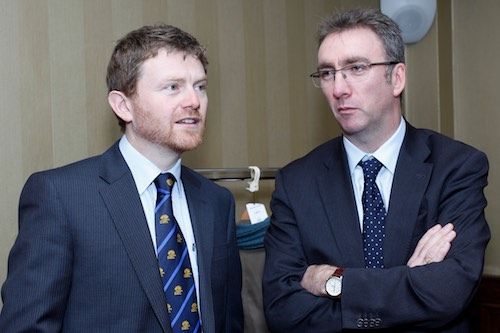





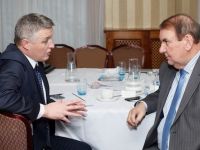


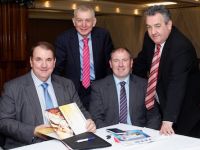


While there are more positive signs long term, the dairy and beef sectors are potentially facing a difficult winter, according to Trevor Lockhart, Chief Executive of the Fane Valley Group.

Speaking at the quarterly lunch of the NI Grain Trade Association, Trevor pointed out that 18 months of higher milk prices had encouraged global production to escalate at twice the rate of the growth in demand. This oversupply situation has been exacerbated by a decline in demand from China and more recently by the Russian ban on European dairy products.
According to the Fane Valley CEO the supply and demand dynamics have therefore shifted firmly in favour of product buyers who are now utilising built up stocks and only entering the market to fill their short term needs. As a consequence global dairy markets have fallen by approximately 45%. In spite of EU measures such as private storage aid, local farm gate milk prices have fallen sharply as they begin to reflect the overall weakness of dairy markets and the stubborn resistance of buyers to purchase ahead.
Although the emergency support measures introduced by the EU will be of some small benefit private storage is not an attractive outlet for processors particularly as the product will re-emerge at a later date. Against this backdrop and the prospect of cheaper feed costs in the USA and the southern hemisphere peak season being only a matter of weeks away Trevor forecast that the downward pressure on dairy markets looked set to persist for the short term. He added that although local processors will do everything possible to support milk prices through the forthcoming period the winter months will be extremely difficult for all concerned.
Turning to the beef situation, Trevor highlighted the various factors which had combined to once again shift the supply and demand balance against the producer. He explained that although the ‘horsegate’ scare had resulted in a significant increased demand for ‘in-spec’ cattle across the UK the improved farm gate prices had been short-lived. Higher levels of EU beef production and imports coupled with reduced exports and falling beef consumption had since created a ‘perfect storm’ which had led to a huge build-up of frozen manufacturing beef stocks within Europe which in turn had significantly undermined the market.

Of particular note was the impact of a ban on ritual slaughter methods in Poland which resulted in this meat being sold widely within Europe as opposed to moving eastward and a decision by many UK retailers to reduce the promotional activity around beef in the aftermath of ‘horsegate’.
By way of illustration Trevor explained that the price of the various grades of forequarter or manufacturing meat, which constitutes a significant part of the value of a carcass had fallen by £1 to £1.50per kilo over the past year. This he said has had a material impact on the available returns and pushed beef finishing into significant losses, a position he warned was unsustainable.
On a more positive note Trevor drew attention to emerging opportunities to potentially export beef products outside the EU from the Republic of Ireland and the UK both of which could, in the first instance, assist in regularising the beef stock situation and underpin an improved market outlook. But first he pointed out the industry must overcome several hurdles the most important of which was securing the necessary market access approvals for both Northern Ireland and the individual factories who wish to engage.
One possible viable market is manufacturing meat into the USA. The decline in USA internal beef output along with the opportunity for South America to fill the void in Russia, has resulted in an opportunity for beef exports to the USA at prices above current EU levels. The Philippines and China may also offer opportunities for Ireland and/or UK.
Overall however, Trevor stressed that the short term outlook remained very uncertain. He added “When you consider the recent price reductions and the short term market challenges together with the prospects of a significant tax bill for many producers in January based on an earlier period of higher prices, then in the absence of a return to improved markets, the cash flow strains on livestock farms will inevitably build as we progress through the winter. ”
NIGTA Fane Valley Meeting September 2014


The provinces livestock sector will benefit from a new, world leading initiative to improve feed and food safety. Having completed a very successful pilot scheme the Food Fortress program is now being implemented by two major sectors of the agri food industry and will give NI produce a unique advantage in the highly competitive global food market.

Commenting on this development, Agriculture Minister, Michelle O’Neill said “It is pleasing to note how NIGTA, local companies and our Institute of Global Food Security at QUB have driven forward the Food Fortress Feed Assurance Project to help protect our food and feed supply chain. This will help ensure the production of safe animal feed, underpinning our local Agri-food sector; and it will be an invaluable tool in developing further export markets to support the overall aims and objectives of the Agri-Food Strategy Board.”
The scheme has been extensively trialled and the outstanding results returned from the six month pilot program has brought an immediate response from the industry with the broiler sector becoming fully engaged in the scheme and the inclusion of the Food Fortress in the newly published standard for the Farm Quality Assured Beef and Lamb schemes.
Ian Stevenson, Chief Executive of the Livestock and Meat Commission speaking at a meeting of feed compounders from North and South of the border in Armagh this week said “The scheme has proved highly successful and cost effective in delivering a much higher level of surveillance of the feeds supplied to local farms and this has prompted us to include it in our Beef and Lamb Quality Assurance Schemes.”

Food Fortress was developed in partnership with the Global Food Security Unit at Queens University led by Professor Chris Elliott who commented “This scheme puts the animal feed trade in Ireland ahead in the world. I congratulate the trade on having the foresight to utilise the scientific knowledge and modern technology to carry out this detailed sampling, and monitoring plan.” He added “As the first link in the food chain you are setting an excellent example. This must be followed throughout the food chain, with the ultimate aim of testing and monitoring everything that is imported into or exported from Ireland.”
The Food Fortress programme was set up in response to the recommendations of the Industry Feed and Food Assurance Group following the serious dioxin contamination in 2008. This group represents all aspects of the agrifood industry and aims to reduce the commercial and food safety risks of contamination.
Robin Irvine, Chief Executive of the NI Grain Trade Association (NIGTA) said “The feed trade has been working closely with Queens to develop a feed assurance system which will help ensure the safety of all feed materials coming into the island of Ireland and will continue to monitor them through the processing and transporting of the animal feed to the farm gate. A detailed analysis of all sources of contamination and monitoring systems has been developed in conjunction with a comprehensive sampling and testing regime.”
NIGTA President, Alan Johnston , pointed out that this scheme was part of the feed trade’s efforts to support the “Going For Growth “ and “Harvest 2020” strategies which have been developed to assist the island of Ireland meet certain growth targets in the agri food industry by the year 2020. He emphasised that similar efforts are required throughout the food chain and support must be forthcoming from government, the regulators and financial institutions. .He added “It is important to remember that the agrifood industry is a major export earner, the leading private sector employer and vital to the economy of Ireland – both North and South.”
Food Fortress Meeting Armagh 2014


It was a “welcome back” situation when Colin McDonald, Chief Executive, RUAS spoke at the NI Grain Trade Association’s annual general meeting. Colin is a former Executive Committee member and former Vice President of NIGTA.

Commenting on Colin’s success in spearheading the change in location for the Balmoral Show last year to the new site at the Maze, NIGTA President, Owen Brennan said that losing Colin before he took up the NIGTA Presidency was a loss for the Association but was certainly a “win,win” for the RUAS. The mammoth task of moving to the Maze had taken years of planning , enormous attention to detail, hard work and the persuasive skills to convince RUAS members and the public that it was the correct decision.
NIGTA members enjoyed Colin’s enlightening presentation which started with the aviation history of the new site, followed by its political history. He outlined the Master Plan for the move and the various hurdles that had to be overcome including the regulatory aspects.

However the efforts of Colin and his team were well rewarded when the Balmoral Show 2013 was a resounding success with a massive attendance. Indeed it was such a success that trade stand space is fully booked for this year.
Commenting on the RUAS’ recent financial report Colin said “ At present we are asset rich and cash poor but hopefully that will change in the near future.”
Presenting NIGTA’s financial report to the AGM, Stephen Burrell, Honorary Treasurer, announced that NIGTA was also cash poor and unfortunately was also asset poor. However the Association had ended 2013 with a very small surplus and this was an encouraging result considering the introduction of the Food Fortress scheme, the appointment of a Chief Executive and the amount of political lobbying and liaison with other farming organisations.
The election of office bearers resulted in Alan Johnston being elected President, Stephen Burrell being re-elected Honorary Treasurer and David Malseed being re-elected Honorary Secretary.
NIGTA AGM 2014


“This is the ongoing aim agreed and being implemented by the agri food industry and government working together” Peter Scott from DARD’s Climate Change and Renewable Energy Branch told a meeting of registered feed advisers organised by the NI Grain Trade Association.
Outlining recent developments for achieving this aim Peter stated that the FAO (Food and Agriculture Organisation) report issued in September pointed to efficient and good farming practice as the key to achieving GHG reductions with carbon intensity being the measurement.

He also noted that Climate Change is an element of the Rural Development Programme and one of the measures within this is “precision livestock feeding”.
In line with these recommendations the NI Greenhouse Gas Implementation Partnership which includes representatives from government and all sectors of the agri food industry has formed a sequestrian sub group to sit alongside the arable, dairy and red meat subgroups.
The sequestrian sub group will examine the potential to reduce agriculture’s total carbon footprint by maximising the carbon stored in soil, grassland and forestry – better nutrient management is the core theme.
The NI Greenhouse Gas Implementation Partnership’s strategy will be aligned with the Rural Development Programme’s efficiency measures that deliver carbon savings. This efficiency is vital to ensure that imported food with a much higher carbon footprint does not replace local produce.
Peter Scott emphasised that the overall aim is not only to meet legislative targets but to make Northern Ireland one of the most carbon efficient places in the world to produce food. The members of the Feed Advisers Register (FAR) would play a vital role in communicating this message at grass roots level and in assisting the industry to achieve the efficiency measures required.
Feed Adviser Training
Following these comments, George Perrott, Head of Feed Sector AIC (Agricultural Industries Confederation), which is NIGTA’s affiliated organisation in GB, told the seminar that over 100 feed advisers in Northern Ireland are registered with FAR (Feed Advisers Register). Progress training for this is carried out on-line and includes environmental aspects, farming systems and profitability. He pointed out that all of these sectors are inter-related and advisers must be familiar with all of them in order to assist farmers to achieve these objectives.

Advisers who complete Module 1 of the training programme will be familiar with the various environmental emissions, the nutrient content of forages and feeds; feed management systems; feed labelling; measuring of feed performance and environmental aspects including the Greenhouse Gas Action Plan.
Module two will be devoted to the nutritional link to animal health and fertility in ruminants. Advisers must be aware of the on-farm opportunities to improve fertility, health and welfare. They must have the knowledge to determine the nutrients supplied from home produced feed and forage and be cognisant of ALL sources of mineral and vitamins from feed – mineral licks, buckets, water, bolus, drench, injection etc and advise how to balance these in the overall feeding programme.
Advisers must show competency with computer rationing programs and work with the farmer to monitor production performance data, assisting with improvement plans where necessary.
Awareness of customer requirements will be an important knowledge area – understanding processor contracts, environmental and welfare requirements, and government and European policy pressures.
George added “ Farm advisers are an important source of information and advice since they are interacting on a one-to –one basis with the farmer, and have built a relationship of trust and confidence. Their input will help ensure that the industry plays its part in the environmental and animal welfare aspects along with farm profitability in order to achieve sustainable and profitable food production in the province.
FAR Seminar 2014


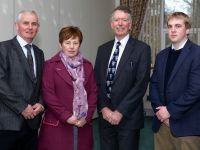


The Northern Ireland Farm Quality Assured Cereals Scheme (NIFQACS) has been revised and updated for the 2014 harvest.
Purchasers of assured local grain should be aware that -

The grain passports which must accompany each consignment of cereal will now have stickers applied which are valid for 1 season.
Deliveries in the current season should be accompanied by a passport with a red sticker – see sample right!
Passports must now include trailer identification as well as vehicle registration number.
The frequency of farm inspection has now been increased to 18 months in line with other farm assurance schemes.
Other enhancements are aimed at improving the effectiveness of pest control and at managing the risk of mycotoxin contamination in grains.
A register of all participating growers is available from Northern Ireland Food Chain Certification (NIFCC) Tel – 02892 633017 and can be viewed on www.nifcc.co.uk
Good communication within an integrated supply chain in order to match growth with market opportunities is the way forward for the Northern Ireland agri food industry.

This was one of the comments from Clarke Black, Chief Executive, Ulster Farmers Union when he spoke at a recent NI Grain Trade Association meeting. He pointed out that the industry here had excellent facilities producing top quality products backed by natural resources and innovative people and companies, but they need to work closely together throughout the supply chain to brand and promote Northern Ireland.
Communication within the chain is vital to meet the innovative challenges. He cited the recent situation in the beef industry where specifications changed but there was a lack of communication regarding the proposed changes and the reasons for their implementation.
Demand for food is growing throughout the world providing market opportunities both locally and internationally. It is important that we understand the needs of international markets - it was noted that Ian Marshall the UFU President was part of the delegation from the LMC in China recently. Clarke emphasised that each country has its own unique procedures for doing business and product specifications. We must familiarise ourselves with these markets.

Such developments will provide innovative challenges in terms of policy, product development, marketing, quality control and branding but the opportunities are there to grow and develop our industry if we co-operate and communicate.
Commenting on CAP support Clarke pointed out that it is almost £300 million per year coming into Northern Ireland and is 87% of total farm income therefore it is vital to maintain it. He pointed out that this support was originally coupled to numbers of livestock and acres of grain but the current proposals are to have it paid on an area or hectarage basis which, in effect, will move the support away from areas with a higher productive capacity and which offer greater support for the economy. However, he stressed that we must also find a way of supporting those in the more disadvantaged areas, particularly beef producers in those areas. It is vitally important that these changes in support must also be phased in gradually in order to give farmers time to adjust.
Clarke concluded by commenting on the lack of decisions from government for the agri food industry and especially on the “Going For Growth” strategy. He said, “We need support from government, regulators and the financial institutions to ensure a fully integrated agri food chain that is co-operating to take advantage of all of the innovative market opportunities that will be available.”
NIGTA UFU Meeting June 2014


Alan Johnston, who is responsible for all of Moy Park's feed mills throughout the UK has been elected President of the Northern Ireland Grain Trade Association (NIGTA).

Alan began his career with O'Kane Poultry in 1997 as a Broiler Field Officer and in 1999 moved to McLarnons Feed Mill as assistant Mill Manager and then progressed to the role of General Manager. In November 2010 he took up his current position with Moy Park as UK General Manager, Feed Mills, responsible for over one million tonnes of feed annually
Commenting on his role in NIGTA he pointed out that the work of the Association covers a wide spectrum including feed quality and traceability plus environmental issues, liaison with other farming organisations and lobbying on behalf of the agri food industry. He added “We are currently progressing our Food Fortress scheme to ensure that farmers here have leading world standards of feed safety and traceability.”
Alan is a past pupil of Clough Primary School, Co.Antrim and Cambridge House Grammar School, Ballymena. He was also a member of Glarryford Young Farmers Club.
From a farming/milling background he said ” My father worked for Morton’s Flour Mill in Ballymena, and that is possibly where I got the bug for milling”
Alan studied General Agriculture at Greenmount specialising in advanced nutrition and spent his industry placement year working in the turkey department at O'Kane Poultry and on a Canadian beef lot..
He has a keen interest in rugby, having played 1st XV at school, then captained the Greenmount team, played for Ulster Colleges and Universities, and at club level for Ballymena and Ballymoney.
- You are here:
-
Home

- NEWS-UPDATE