The Brexit withdrawal agreement to which government are now committed will have a significant impact on businesses in Northern Ireland and unlike the earlier attempts by Theresa May it will mean a changed relationship between Northern Ireland and the rest of the United Kingdom. The border in the Irish Sea will create an additional administrative burden for materials or product entering Northern Ireland from the UK mainland. The potential for further complication in terms of different duties applied to this trade will depend on whether the UK can negotiate a deal with the EU over the next 12 months or so.

The advantage of the agreement over a no – deal outcome is that Northern Ireland will remain in regulatory alignment with the European Union, with access to the single market for the foreseeable future, while the rest of the UK will seek to pursue new trade deals and will be free to develop their own regulatory rulebook.
While local farmers and businesses will continue to conform to European standards for at least 4 years (with a further 2 year withdrawal period should our assembly decide to end the arrangement) – there is however no indication that they will continue to enjoy the EU system of farm support.
The £240 million of single farm payment which is essential to the viability of local farming may be lost in favour of unspecified and unquantified package of incentives for environmental protection.
A major concern in all of this is how can Northern Ireland businesses engage with the EU when the rest of the UK has withdrawn. The UK government have already removed their civil servants from Brussels and UK agencies will no longer be eligible for membership of many European committees and forums across a wide range of activity.
According to NIGTA Chief Executive, Robin Irvine “We will be subject to EU regulation – but with no voice at the table when these regulations are being discussed and negotiated. Any divergence between UK and EU regulation has the potential to create distortion in the market and we need to be able to exert some influence to ensure a level playing field. It will be important for local representatives to have access to the various EU rule making bodies and the communication with Brussels will be essential. New bodies and structures -taking a pragmatic approach at an all-island level will also be required to make things work when we can no longer look to London for direction.
A major concern for the agri-food sector is the potential for this new government - with a substantial majority – not depending on support from the rural areas or from the minor parties – to enter into trade deals which would allow the UK to significantly increase the import quota of cheaper food while still requiring the high welfare and regulatory standards for home produced product.
This cheap food will be enthusiastically welcomed by the electorate but could be devastating for a region like Northern Ireland where we depend on exporting the vast majority of what we produce. Northern Ireland has a population of less than 2 million people but we produce meat, milk and eggs for almost 10 million consumers. The natural market for this product is mainland UK - but if this market is devalued by open access to imports and competition from low cost regions such as South America Northern Ireland producers will be glad that they still have access to Europe’s 450 million consumers and the challenge will be to refocus the business model beyond the UK shores.”
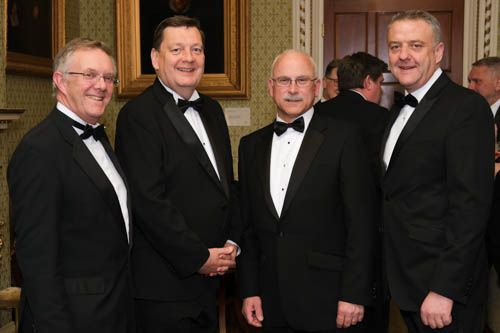
President of NIGTA, David Garrett speaking at the 54th Annual NIGTA Dinner welcomed visitors and guests to the event:
Before I propose a toast to the association, I would like to say a few words about our industry, its successes, its opportunities and the challenges we face. Moreover, how we might be able to overcome some of those challenges.
I am delighted to report on a year of significant growth in demand for animal feeds across all sectors.

I would suggest that the feed industry is the bellwether of a healthy food industry and to quantify that, every weekday in Northern Ireland, we produce ten thousand tonnes of animal feeds. That was over 2.6 million tonnes in 2018.
This past year we have experienced strong demand for ruminant feeds, which was anticipated considering the weather challenges and forage shortages that farmers have faced over the past couple of years. From flooding to drought, they have had to be resilient to cope with it all.
Increasing pig feed demand has been a feature for many years now and greatly improved genetics has led us to the point where we are producing as many pigs now as 20 years ago with far fewer sow numbers. Our factories want more pigs to remain efficient and to meet market demand, so there is further potential growth there to be grasped.
Poultry feed demand continues to grow, especially for layers and broilers. The increasing demand for chicken and eggs has been a feature in homes across the UK and beyond and our farmers and food businesses here in Northern Ireland have been very successful in getting a significant share of that business.
The success of our burgeoning feed industry is echoed across Europe and indeed globally. The Alltech Global Feed Survey estimates world animal feed production at 1.03 billion tonnes in 2018, up 3% on the previous year.
Each week the population of the world’s cities grows by 1.3 million people.
The increasing demand for feed is due to these growing urban populations wanting to eat more meat and dairy food products.
This can create its own challenges as many consumers now have little connection to food production or knowledge of farming.
City dwellers, particularly in affluent societies can often misunderstand farming practices and as a result, they can gain the impression that animals are harshly treated. It is not a fair representation as farmers care passionately about the welfare of their livestock.
We can only meet this increasing demand for food by the application of good science and technology including the use of products, which protect animal welfare.
One such example is the use of Ionophores as coccidiostats. Recent media attention on these additives demonstrates the misguided and unscientific perceptions, which add nothing to food safety but have the potential to impair efficient production, harm animal welfare and add to the cost of food.
It can be difficult to have a sensible debate with people who believe something strongly because of propaganda on social media, however erroneous.
On social media especially, “Beliefs Trump Facts”.
The disruptive and malicious activities of some pressure groups towards livestock farmers is something that ought not to be allowed to continue.
Farmers have enough to do without having to defend their farms against wanton vandalism as is happening in some parts of the UK.
The agri-food sector in Northern Ireland is our biggest industry, biggest export earner and provides high levels of quality employment.
Our livestock sector is highly efficient and well managed. Output has grown through efficiencies at farm level, involving better genetics, improved nutrition and more integrated supply chains.
Efficiencies of scale have also played a part in growing our industry and many farms are orders of magnitude larger than a generation ago.
The grain trade has supported this growth through investment in plant and equipment, in research and development, in the establishment of robust quality systems to protect the food chain and most importantly of all, by training our people to produce better nutritional solutions, provide relevant advice and to deliver much of the technical support that the industry needs.
It is clear that our industry is now attracting bright young people at the start of their careers. This bodes well for our collective future.
We as an agri food industry are heavily dependent on selling our food products outside of Northern Ireland. We export three quarters of our production with mainland GB and its large population a ready market for our wares.
This is a success story for our industry and for our food companies but it does bring challenges. Our industry now carries the environmental footprint of food consumed beyond our shores as well that of our local customers.
Sustainability has been a major challenge as the industry has grown and as a trade, we recognise that the efficient use of inputs and the reduction of emissions to our atmosphere and our waterways is a key area, which we can influence.
Our industry is meeting the challenge of more environmentally sympathetic farming with the ongoing training being delivered to our registered feed advisors.
The FAR training program has been refined and developed by NIGTA and endorsed by all the industry agencies and regulators.
Over 130 FAR advisors are registered here in Northern Ireland. These are our sales specialists and technical experts who are talking to farmers every day.
They are the trusted people that our farmer customers listen to and this means we are in a position to deliver the key messages on nutrient efficiency – particularly in terms of feed and fertiliser inputs.
The concept of efficiency is readily understood at farm level and efficiency in nutrient management ensures financial efficiency for the farmer as well.
I would like to thank Gill Gallagher for all the work she has put into this and to CAFRE for its help in the delivery of the training at Greenmount College to address the environmental challenges faced locally.
Farmers are aware of the need for environmental responsibility in terms of reducing phosphorous and ammonia emissions and now they get the best possible advice to achieve it. The trend for more accurate rationing of all farm livestock has led to lower levels of phosphorous and protein in diets.
Each one percent reduction in protein leads to a reduction in ammonia of eight percent, with a commensurate reduction in phosphorous, because many high protein ingredients also have high phosphorous levels.
With that in mind, I would urge all parties involved in the planning process to work together to facilitate the continued growth of our industry by allowing new development where it is more efficient than what it replaces and where it improves the environment by reducing the emissions of ammonia and other potential pollutants.
We do not want to see narrow environmental considerations cap our ambitions to grow.
The big picture must be taken into account in that we have no polluting heavy industries and a much lower vehicle density than in GB.
The greatest uncertainty we are still facing is the withdrawal (or not) of the United Kingdom from the European Union.
Northern Ireland and the Republic of Ireland have had an open border for trade in the single market for 26 years since 1 January 1993.
Put in context, that is a whole generation...
Over those years, the economies and especially agri-businesses on both sides of the border have grown, integrated, and blossomed. The threat of a customs border is understandably weighing on the minds of all of us that would be affected.
To borrow a strapline, we have grown better together and we do not want to jeopardise that progress.
Our supply chains now operate on an all-Ireland basis - often with short lead times. The efficiencies that have allowed grain and other cargoes to offload in multiple ports could be curtailed with different treatment of imports between UK and EU.
Any delays or complications to our supply chain, physical or otherwise, will inevitably create additional costs that business will need to absorb or pass on to the end consumer.
Our feed mills and livestock producers depend on imports of over two and a half million tonnes of feed materials.
We therefore need to have tariff-free access to the global market for grains and proteins to ensure a competitive cost base for local farmers and a level playing field with our nearest competitors.
In GB, the situation is significantly different with a substantial arable sector producing a high level of self- sufficiency in feed grains.
It is highly regrettable that we have been without a working executive at Stormont at the time of our greatest need.
Nevertheless, NIGTA has been at the forefront in working with other stakeholders within the Agri-food sector to ensure that the integrated nature of our agri food industry is understood, and the unique consequences for Northern Ireland are recognised in Whitehall.
Special thanks must go to Declan Billington, Michael McAree, Keith Agnew and others for their commitment to representing our industry’s interests in the face of all the challengesof leaving the EU.
I have the privilege to nominate our charity this year.
Many people say that charity begins at home and I see that many of our local charities are well funded. However, folks in Northern Ireland are more than generous in supporting overseas charities as well.
This year I have nominated “Fields of Life” which operates in east Africa. Many of you will be aware of the great need in that part of the world currently where even fresh clean drinking water is a luxury.
Here we put on our feed labels, “ensure access to fresh clean water” for the welfare of our animals.
It is fitting then that we think of others that are not as well off as our animals when it comesto the most basic of life’s necessities.
I would urge you to give generously to this worthy cause this evening.
Finally, I would like to recognise the hard work of our CEO Mr Robin Irvine. He ensures that the association is run smoothly and fairly represents the interests of its members and by extension, their customers.
I want to take this opportunity to thank him for the valuable support he is giving to me while I fulfil the duties required as President.
I would also commend him for his valuable work with Food Fortress as the membership and engagement across the Island of Ireland has continued to grow.
On behalf of the Grain Trade, I would like to thank members and their guests for your continued support of the Association.
Rest assured the executive will continue to work hard for the interests of our members through what is expected to be an interesting and challenging year ahead.
In proposing a toast to the association, I would ask you all to charge your glasses and be upstanding as we drink to our Association and its continued success as a partner to andadvocate for agriculture and the food industry here in Northern Ireland...
“The Association”
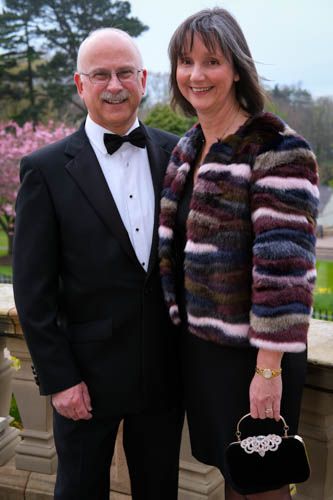
NIGTA Annual Dinner 2019





The local feed trade turned out in force to support the round Britain cycle tour of feed mills and grain businesses throughout the UK.

The Northern Ireland section covered close to 300 miles on a 3 day circuit of the province – Starting in Belfast Harbour – via Newry, Armagh, Pomeroy, Omagh, Randalstown, Stranocum and finishing up in Larne.

A total of 33 cyclists from 14 local businesses enjoyed glorious weather as they travelled through some of the most scenic areas of Northern Ireland.
All funds raised in Northern Ireland will go to assist with the work of Rural Support NI. Jude Mc Cann of Rural Support was delighted with the efforts on behalf of his organisation “ Those in the supply trade see at first hand the pressures that many farmers face and understand the stress caused by financial and regulatory pressures - the sense of isolation and anxiety that can affect both the farm business and the farm household. Our work relies heavily on charitable donation and we greatly appreciate the continued support of the Grain Trade Association.”

Robin Irvine of NIGTA was pleased with the response from members – “We had cyclists volunteering from all parts of the province and from the small family businesses to large multinational companies. We are hopeful that this magnificent effort can translate into a significant contribution to the work of Rural Support.
To donate to the fund please go to https://www.justgiving.com/fundraising/GAFT

Local Grain Traders and Feed Merchants are pulling on the lycra and getting on their bikes to support farm charities as part of a UK wide cycle relay. The itinerary for this 3,700 mile marathon will take in the principal feed mills, ports, grain stores and supply trade business sites in the UK.
All the regional Grain and Feed Trade Associations have come together to support the farming industry through the Farming Community Network (FCN) with all funds raised in Northern Ireland going to assist with the work of Rural Support NI.

“Supply businesses play an integral part in the farming community and we see at first hand the pressures that many farmers face” according to Robin Irvine of NIGTA.
“The stress caused by economic and regulatory pressures, the sense of isolation and anxiety can affect both the farm business and the farm household”.
“We aim to help increase awareness of the issues facing farmers, while at the same time raising funds to provide on-going support for all members of the farming community and their families. Our team of riders include drivers, mill operatives, accountants, sales managers and chief executives and they are working hard to raise sponsorship for this very worthy cause” says Robin.
The Relay is already under way, having started outside the Houses of Parliament in London on 20th June and will visit over 170 different sites representing 75 companies before crossing the finishing line at Stoneleigh Park in Warwickshire on 31st July.
The relay moves into Northern Ireland on 17th July visiting businesses in Belfast Docks, Co Antrim, Armagh, Omagh and North Antrim between the 17th and 20th July Riders from at least 14 companies will be saddling up and visiting 14 sites, covering over 240 miles.
Companies supporting the relay in N Ireland include Tolland’s, Devenish Nutrition, United Molasses, United Feeds, W&R Barnett, Thompsons, Cefetra, Tullyherron Feeds, Gortavoy Feeds, Fane Valley, Moy Park, AB Vista, Chestnutt’s and Agri-Research.
To donate to the fund and support FCN in the invaluable work it does for the industry, go to https://www.justgiving.com/fundraising/GAFT
Fields of Life was selected as the Northern Ireland Grain Trade Association's charity for 2019.
This years NIGTA annual dinner raised £5000 for the charity and the President of NIGTA, David Garrett, recently visited the Fields of Life headquarters in Lisburn to make the presentation.

The Grain and Feed Trade’s cycle relay has been very well supported in Northern Ireland with £5,300 raised for Rural Support at their cycle event in July.
NIGTA president Michael Mc Aree congratulated the 34 cyclists from 13 supply businesses who participated in the cycle “ This is a tremendous effort from the trade and we are delighted to be able to make a significant donation to those in the farming community who are suffering difficult circumstances”.

Chief Executive of Rural Support, Jude McCann said, “We would like to express our sincere appreciation to all the cyclists, feed companies across Northern Ireland and the Grain Trade Association who took part in this tremendous effort. The funds raised are extremely important for our charitable organisation which assists farmers and farming families across the province. In the face of major restructuring within our industry the services of Rural Support are extremely important. This significant donation is very much appreciated at this particular time.”
The Northern Ireland leg was part of a 3,700 mile tour of the United Kingdom which has raised in excess of £60,000 in support of rural charities.
Grain and Feed Trade Cycle Relay 2018


The Northern Ireland Grain Trade Association have this year chosen Leukaemia and Lymphoma NI as the charity to benefit from the funds raised by members and their guests at their annual dinner held some weeks ago.
Further donations have been received since the dinner and Association president, Michael Mc Aree was delighted to present a cheque for the grand total of £6,770 to Joanne Badger, Leukaemia and Lymphoma NI.

In thanking NIGTA for their generous support Joanne highlighted the work of the charity in supporting life-saving research into Leukaemia, Lymphoma and blood cancers here in Northern Ireland.
These cancers can be diagnosed in both children and adults and through their support of the Haematology Research Group at Queens University the charity aims to ensure that in the future people of all ages survive blood cancers.
Sustainable intensification of farming and food production can be achieved - but only through commitment from all partners and the application of new research based technologies. This was the message from Patrick Casement when he addressed a recent meeting of the NI Grain Trade Association. Patrick is a farmer and environmentalist and is Chairman of NI Environment Link and a member of the National Trust's Rural Enterprise Panel. He said that farmers need to get recognition for what has already been achieved in areas such as carbon sequestration in hedges and trees. He predicted that agricultural support in the future will recognise and reward the contribution farmers make to the environment and management of the countryside.

The challenges are highlighted in the “State of Nature” report which highlights a wildlife decline in the UK with agriculture as the main contributor. Habitat quality and quantity have been affected; water quality has suffered from phosphate and nitrate enrichment while air quality has been impacted by ammonia emissions from agriculture – mainly generated by ruminant livestock. The net result has been abandonment of much of agriculture in the uplands and further intensification in the lowland areas. The success of agriculture in the future will depend on the ability of the industry to reconcile food production with care for the environment.
A new approach is necessary – but it must be evidenced based and supported by measures such as remote monitoring of habitats in order to assess change rapidly. A sustainable land management strategy must be achieved with the carrot rather than the stick if we expect farmers to respond. Government bodies setting rules and penalising farmers will result in a “them and us” scenario whereas knowledge transfer along with financial encouragement can create a team effort which delivers the desired results for everyone.

Achieving a balance of grazing in the uplands and intensification in an environmentally friendly manner in the lowland could have huge market potential. Sustainable intensification based on evidence and scientific research has the potential to provide a win-win result for the lowland areas while farmers in the uplands can continue to graze their livestock in addition to being rewarded for the care of the environment and wildlife.
Patrick added “This might sound like a pipe dream but is achievable if the industry accepts the challenge and the responsibility of reconciling food production with care of the environment – modern agricultural systems are unsustainable if we do not act”
He warned “As farmers we must remember that we rely on the rural environment, not just for food production, but for clean water, clean air, carbon sequestration, pollination and recreation.”
Patrick concluded by complimenting the NI Grain Trade Association on their most recent training module for farm advisers which focuses specifically on reducing the environmental impact of intensive farming.
NIGTA September Meeting 2017


- You are here:
-
Home

- NEWS-UPDATE